The market is not disappearing.
But the part of the market that operators and investors have historically relied on is.
For decades, hazardous waste has been understood as a downstream services industry, defined by collection, transportation, treatment, and disposal. Scale, asset ownership, and regulatory compliance were the primary drivers of advantage.
That framing is now incomplete.
What is emerging instead is a structurally different system—one where value is increasingly created upstream, complexity is shifting downstream, and control is migrating to those who can manage the network—not just operate within it.
1. A Structural Shift: From Externalization to Internalization
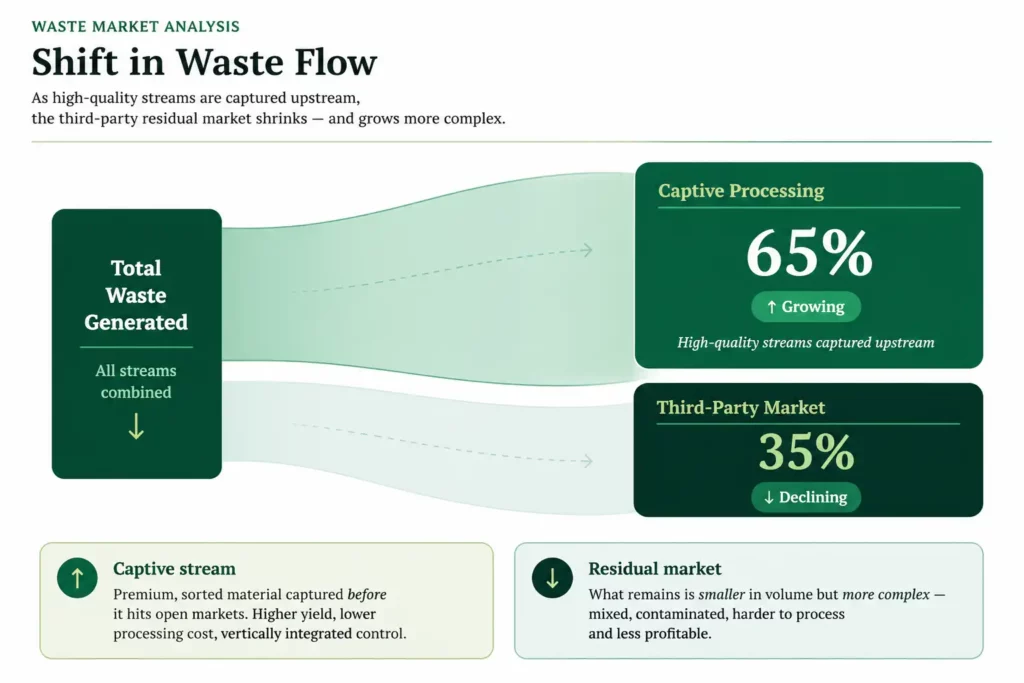
At the core of this transition is a clear shift: Hazardous waste is increasingly being managed at the point of generation rather than through the external market.
Across chemicals and petroleum, waste is being redesigned into production systems through:
- Process re-engineering
- Recovery economics
- Regulatory pressure
The implication is fundamental: The most predictable and economically valuable waste streams are no longer entering the external market.
Understanding this shift requires more than operational visibility—it demands analytics that track how value is retained and how flows evolve.
2. A Market That Appears Stable — but Is Not
At an aggregate level, hazardous waste volumes appear stable.
But underneath:
- Captive volumes are rising
- Third-party volumes are compressing
For operators, this distinction is critical.
Only the third-party market is monetizable—and that market is structurally shrinking.

3. The Residual Market Is More Complex—and Less Forgiving
Historically:
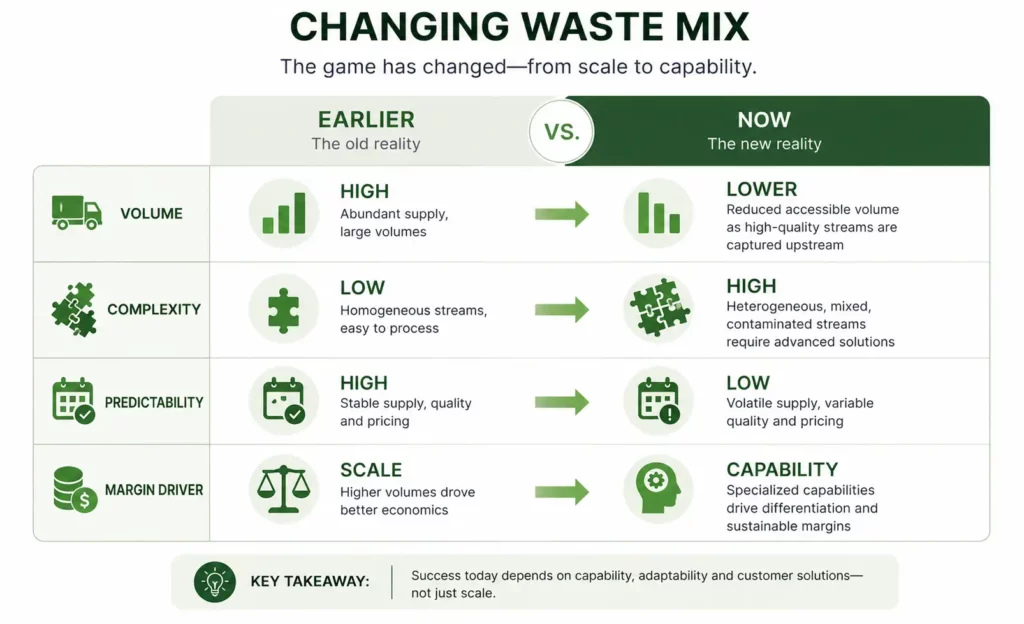
- Large, homogeneous streams
- High recoverability
- Predictable generation
Increasingly:
- Smaller, mixed, contaminated streams
- Irregular flows
- Higher compliance burden
This marks a structural shift: From scale-driven processing to capability-driven complexity management
4. Where Leading Players Are Moving
Leading players are already repositioning—though not uniformly.
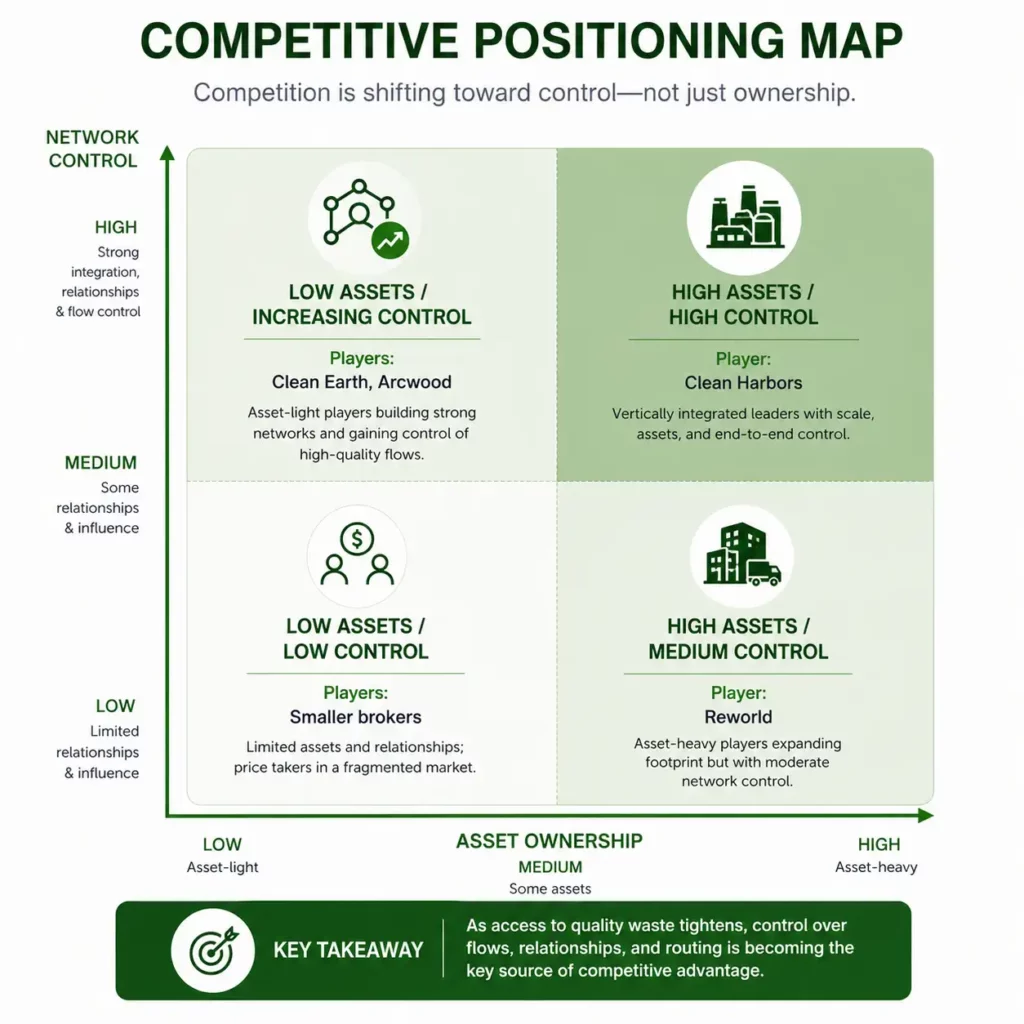
Integrated Players: Moving Upstream
Clean Harbors and Reworld are:
- Expanding direct generator relationships
- Leveraging disposal assets to control pricing
- Building integrated offerings
Reworld’s expansion beyond waste-to-energy signals a clear shift:
Own the waste stream earlier—not just process it later
Clean Harbors continues to:
- Anchor its model around incineration assets
- Expand field services and retail reach
- Use asset control to influence market dynamics
Broker Models: Being Reshaped
Players such as Clean Earth and Arcwood Environmental are navigating a different reality:
- Tightening access to disposal
- Increased competition from asset owners
- Pressure on traditional brokerage economics
In response, they are:
- Securing disposal access
- Driving pricing discipline
- Investing in internal systems and network coordination
5. Geography Is Becoming Strategy
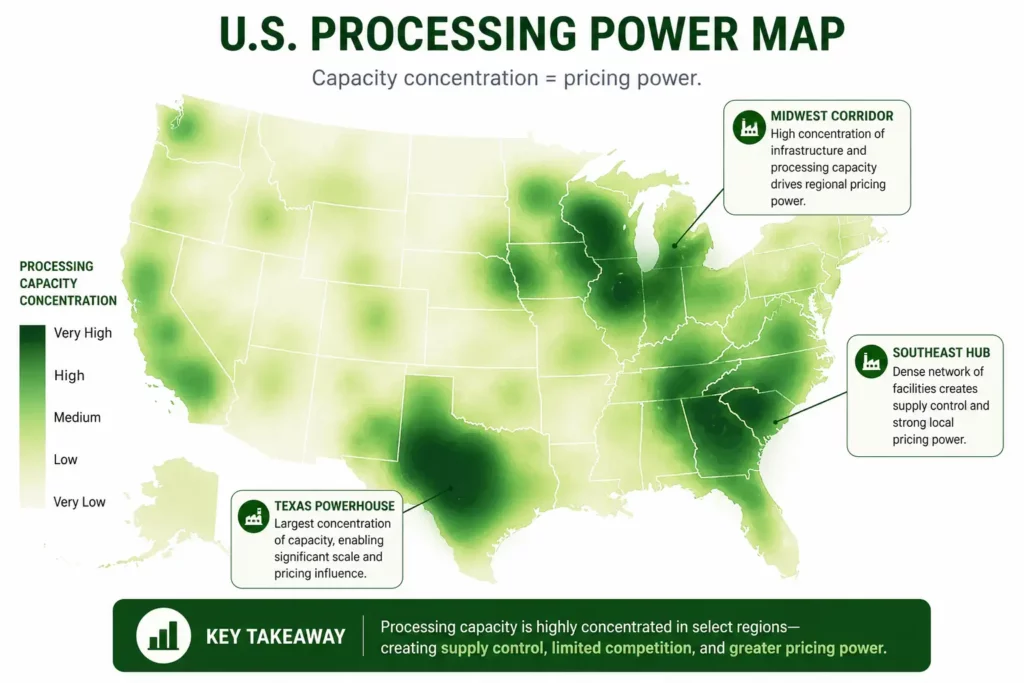
Processing capacity is increasingly concentrated in:
- Texas
- Midwest
- Southeast
These regions benefit from:
- Industrial density
- Favorable permitting
- Existing infrastructure
This creates:
- Bottlenecks
- Regional pricing power
- Dependency risks
These are no longer just operational realities—they are strategic signals surfaced through Waste Industry Data Intelligence.
6. The 3rd Party Model Is Being Rewritten
The combined effect of:
- Upstream capture
- Downstream complexity
- Capacity concentration
Is producing a market that is:
- Smaller in accessible volume
- Higher in complexity
- More dependent on network coordination
This is not cyclical.
It is a structural reallocation of value across the system.
Implications for Operators
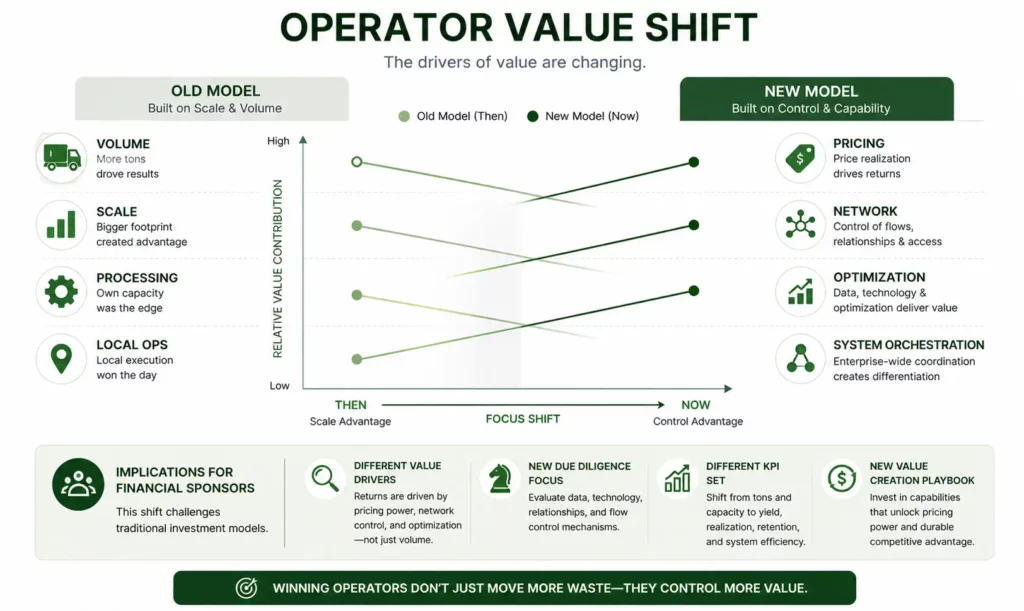
1. Growth will not come from volume: Pricing, mix, and efficiency will drive outcomes
2. Disposal access becomes strategic: Control over capacity defines positioning
3. The network becomes the business: Operators are evolving into system orchestrators
4. Complexity becomes the margin driver: Handling difficult streams is the new advantage
In this environment, operators are shifting toward data-driven models where AI-Powered Analytics for Waste Management supports pricing optimization, routing efficiency, and capacity utilization.
7. Implications for Financial Sponsors
This shift challenges traditional investment models.
1. Volume-led growth is fragile
Future growth is:
- Price-led
- Efficiency-driven
- System-dependent
2. Asset ownership is necessary—but insufficient
Winning requires:
- Access + integration
- Control overflows
3. Platform strategies must evolve
From:
- Geographic roll-ups
To:
- Network integration
- Decision capability
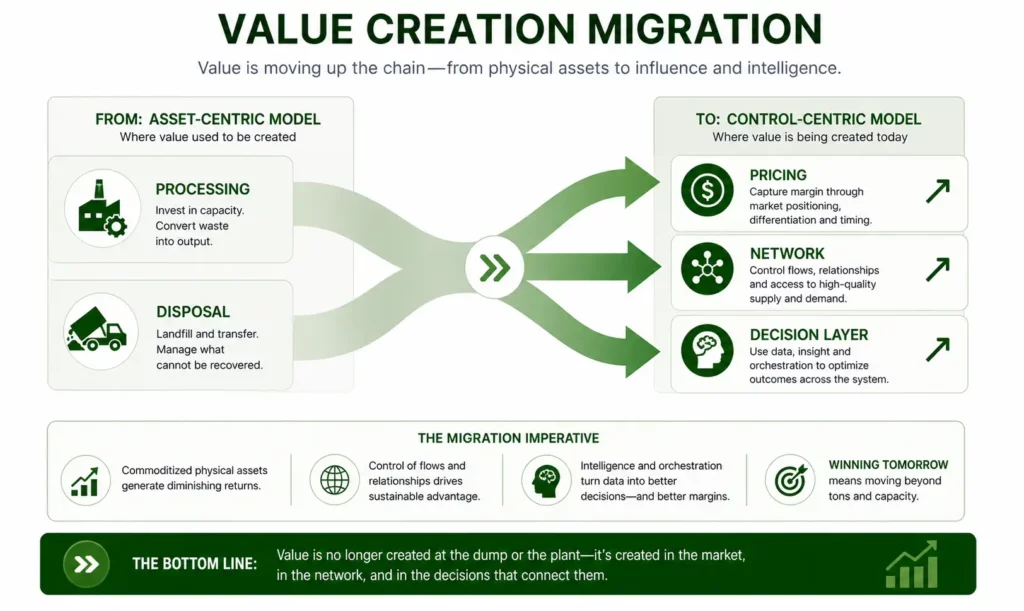
4. Value creation is moving upstream and system-wide
Returns will increasingly come from:
- Pricing optimization
- Capacity utilization
- Flow orchestration
A Shift from Industry to System
Hazardous waste is no longer a linear value chain. It is becoming a dynamic system of generators, facilities, routes, regulations, and pricing interactions.
In such a system:
- Constraints propagate
- Decisions are interdependent
- Value is created through coordination
Closing Perspective
Most operators—and many investors—are still structured for a world where:
- Volume was predictable
- Disposal was accessible
- Markets were local
That world is gone.
The next phase of the industry will not be defined by who can process the most waste.
It will be defined by: Who can understand—and optimize—the system behind the waste