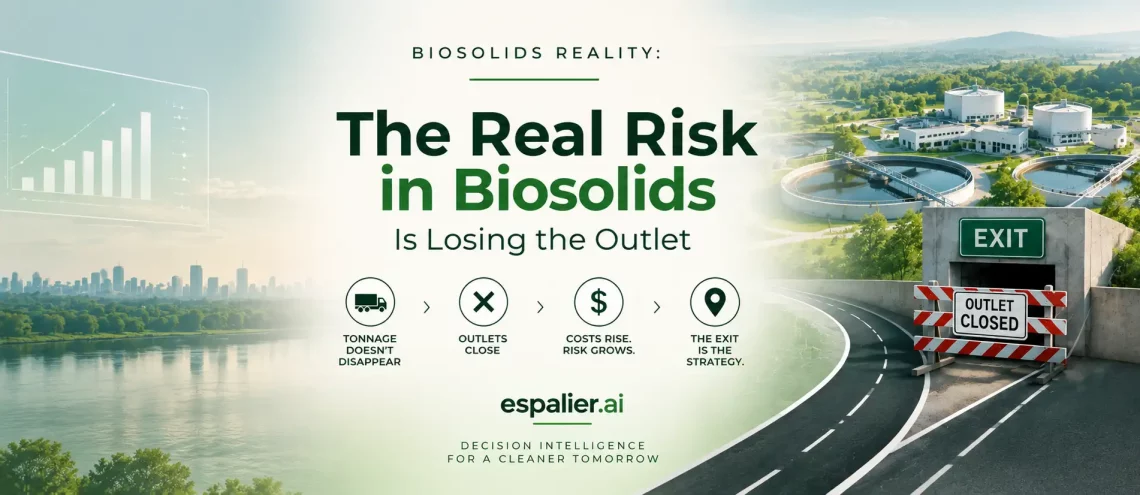
When a disposal outlet closes, the tonnage doesn’t disappear — it moves, farther and at higher cost. The scarce resource in biosolids is no longer processing capacity. It is a reliable place to put the material.
Roughly 24,000 U.S. wastewater plants cannot stop producing biosolids, and the national bill for managing them is projected to nearly double — from about $2.5 billion in 2025 to more than $4.8 billion a year by 2035. The pressure isn’t coming from the volume of material; it is coming from the shrinking set of places that material is allowed to go. Land application, landfill, and incineration remain the principal pathways, but each is tightening under regulatory, capacity, economic, and community pressure — most of all around PFAS. When an established outlet becomes constrained, the underlying tonnage does not fall. It reroutes — often at a higher cost and across a more complex logistics network.
The relevant measure of a biosolids platform is not how many tons it can process. It is how many tons it can reliably place after processing.
Outlet loss is already repricing the market
This is not a forecast. Three markets show how quickly the loss of a single outlet moves from a disposal question into price, margin, and permit risk.
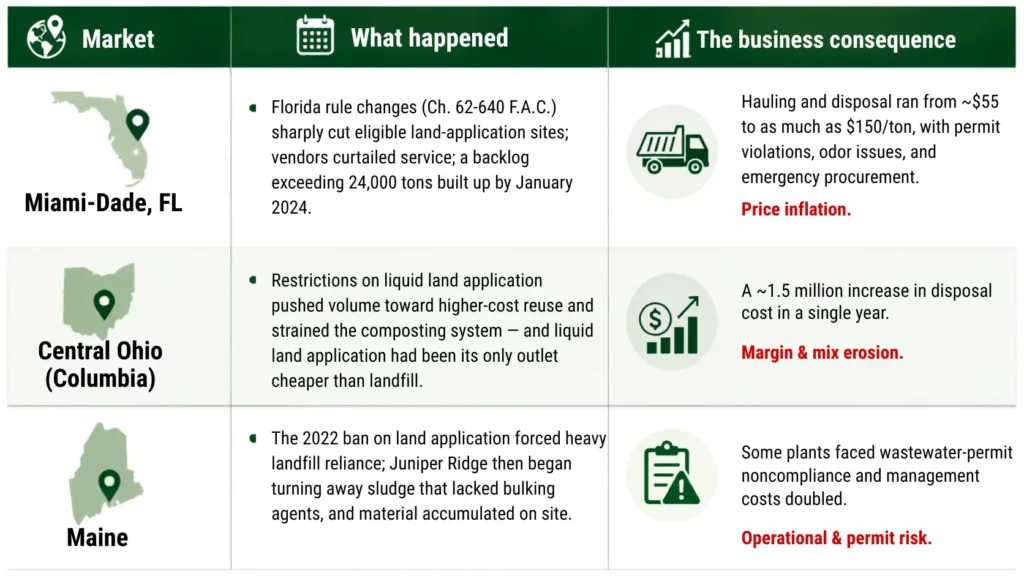
Exhibit 1 — When the outlet closes: three markets, three failure modes. Same root cause, three distinct ways it hits the P&L: price inflation, margin and mix erosion, and operational or permit risk.
PFAS turns outlet resilience into the whole game
Utilities do not generate PFAS — they receive it through incoming waste streams, and once in the system it becomes associated with the sludge. That makes every outlet a question of durability, not just current compliance: an outlet that works economically today may face new testing, acceptance criteria, or public scrutiny tomorrow. The federal posture has made this immediate — EPA’s designation of PFOA and PFOS as hazardous substances created new liability for utilities, and its July 2026 draft biosolids guidance signals where risk-reduction expectations are heading. The cost signal is already measurable: one analysis found PFAS rules raised biosolids management costs by roughly 37%, with facilities in regulated states seeing management costs more than double.
In that environment, processing capabilities acquire option value. Technologies that cut volume, improve material characteristics, or widen the set of acceptable pathways are worth more than their unit economics suggest, because they add exits when a pathway closes. The lowest-cost outlet, in other words, is rarely the lowest-risk strategy.
For investors, diligence moves past tonnage
Tonnage measures scale; it does not measure the durability of that scale. Two platforms managing similar volumes can carry opposite risk profiles if one holds diversified, secured outlets and the other leans on a handful of destinations. The diligence questions that matter sit at the end of the chain: outlet concentration, remaining capacity, transportation radius, contractual protections, exposure to landfill pricing, processing flexibility, and credible contingency routes.
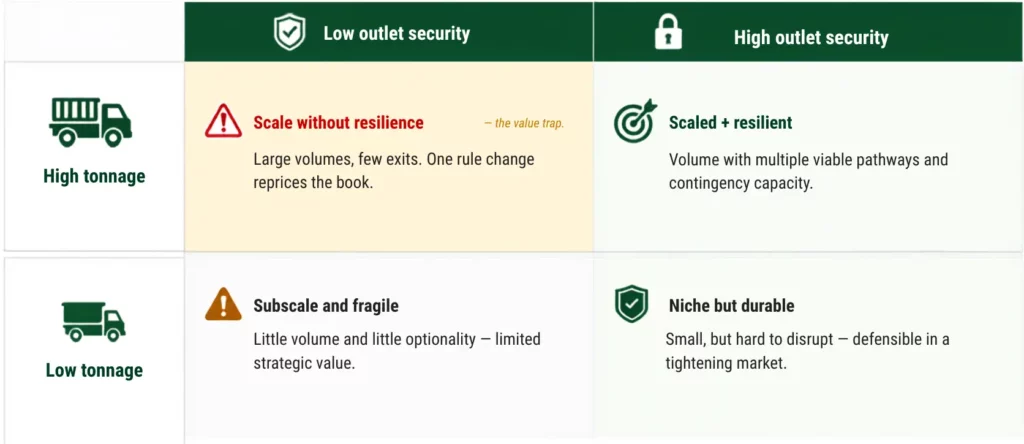
Exhibit 2 — Tonnage tells you the size of a platform; outlet security tells you its durability
The strategic implication follows directly. Value is migrating toward businesses that control scarce permitted infrastructure, maintain diversified outlet networks, or hold processing that expands the range of viable destinations. The thesis is no longer simply capturing biosolids volume — it is controlling enough of the management chain that the volume always has somewhere economically viable to go.
THE ESPALIER VIEW
“Outlet resilience” sounds like a narrative. It is actually a measurement. Every generator’s available outlets, their PFAS and regulatory exposure, the haul radius to each, and the contingency behind them can be mapped and scored — turning a platform’s durability into a number before capital commits.
Which is why the interesting question about a biosolids business is not how many tons it controls. It is how many ways it has to move them when a pathway closes.
THE BOTTOM LINE
Biosolids generation is unavoidable; access to any single outlet is not. As PFAS scrutiny, regulation, capacity limits, and local acceptance reshape the market, maintaining multiple viable pathways becomes a durable competitive advantage. In a market where the tons don’t disappear when an outlet does, controlling where those tons go may ultimately matter more than the ability to collect them.