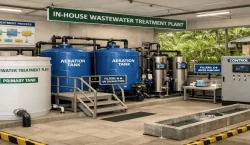
The U.S. hazardous-waste sector has remained one of the most consistently active areas of environmental M&A, averaging 100+ deals annually over the past several years and already showing strong momentum in 2025 year-to-date. This steady pace reflects rising demand for regulated treatment capacity, specialty recycling capabilities, and compliant environmental-services platforms.
But how deals get done in 2025 is changing due to the rapid adoption of AI. What once depended on slow, manual research is now an analytics-first process. AI can scan the industry’s entire digital footprint in real time, connect disparate regulatory and operational datasets, and surface acquisition opportunities that would never appear through traditional deal pipelines. For the first time, buyers can see the full market — not just the deals that find their way to them.

1. Hazardous-Waste Data
Hazardous-waste intelligence is spread across regulatory databases, corporate disclosures, permits, and news flows. Historically, this made it difficult for deal teams to build a full picture of a company without weeks of manual research. AI changes that by unifying the entire public data universe into a single strategic view.
Key sources powering data-driven M&A:
- EPA Regulatory Data (RCRA, BR, TRI, ECHO) – The foundational datasets — waste volumes, generator types, waste codes, treatment methods, chemical releases, and compliance histories.
- Public Generator & State Manifest Data – Uncover real waste flows, customer behavior, and regional supply–demand patterns.
- Permits & Capacity Records – Reveal facility capabilities, operating constraints, and expansion potential.
- Corporate Filings & ESG Reports – Offer insight into strategy, financial health, and investment priorities.
- News & Market Signals – Provide early indicators of facility changes, regulatory issues, or competitive developments.
- Workforce & Operational Signals – Hiring patterns signal volume changes, service expansions, or operational strain.
Together, these datasets create a detailed, multi-dimensional view of every player in the ecosystem — their scale, specialization, waste mix, and compliance history.
2. From Raw Data to Investable Insights with AI
The sheer size and complexity of these datasets can overwhelm traditional analysts. The EPA data alone contains millions of rows across waste codes, management methods, and destinations. Manually stitching this together with TRI and compliance data is impractical.
AI and automation fundamentally change the equation.
Espalier’s data infrastructure pulls directly from EPA and state public sources, cleans and reconciles the data using advanced entity-matching algorithms, and integrates it with corporate, geospatial, and operational layers. This enables M&A teams to scan the entire industry — not manually, but algorithmically.
Key analytics workflows include:
- Geographic White-Space Mapping – AI pinpoints underserved regions with high generator density but low treatment or hauling coverage — ideal for expansion, greenfield sites, or tuck-in acquisitions.
- Facility Clustering – AI groups facilities by waste type, treatment method, specialization, and geography to reveal clusters where consolidation would create cost or routing efficiencies.
- Capacity Utilization Modeling – By integrating BR volumes with permits and operational signals, AI estimates whether a facility is over- or under-utilized — a critical metric for identifying targets with hidden EBITDA potential.
- Compliance Pattern Recognition – Machine-learning classifiers detect patterns in inspection and violation records to estimate future compliance risk — essential for deal valuation and diligence planning.
- Market Adjacency Analysis – AI cross-references NAICS codes, waste streams, and service lines to identify industrial sectors or client groups that overlap, signaling revenue synergy opportunities.
The result is a living, data-driven map of the hazardous-waste market — showing not just who operates where, but how well, what they handle, and how they might align strategically with an acquirer.
3. Scoring Targets Using AI
Once the data is structured and enhanced, Espalier applies a Target Scoring Model designed specifically for hazardous-waste M&A. The model ranks operators using quantitative indicators and risk factors that directly shape value creation.
| Dimension | Example Inputs | Strategic Meaning |
|---|---|---|
| Scale & Throughput | Annual tons generated or managed (BR) | Indicates revenue potential and operational leverage |
| Treatment Mix | % recycled vs. treated vs. disposed | Reveals technological sophistication and margin profile |
| Regulatory Risk | Violation frequency, severity (ECHO) | Adjusts valuation for liability and compliance exposure |
| Customer Diversification | Waste types, NAICS sectors served | Reduces concentration risk and seasonality |
| Location Advantage | Distance to industrial clusters, underserved markets | Signals geographic synergy or fill-in opportunities |
| Sustainability Readiness | Reuse/recycle ratios, TRI trends | Enhances ESG positioning for investors and clients |
Each variable is normalized and weighted according to investor strategy. For example:
- A buyer seeking ESG-aligned assets may prioritize recycling intensity,
- Whereas a vertically integrated operator may weight geographic fit or treatment capability higher.
Machine learning models can then simulate “fit scores” across thousands of facilities, instantly flagging top-quartile opportunities. Espalier’s clients often uncover high-value targets that traditional brokers miss — smaller operators with strong compliance, loyal customer bases, and under-optimized assets.
4. Why This Matters
Hazardous-waste M&A has long relied on local networks, consultant-heavy research, and slow manual diligence. AI disrupts that model.
By leveraging EPA and state data augmented with analytics, decision-makers can evaluate 10x more opportunities, with higher accuracy and significantly lower diligence costs.
The advantage is both speed and precision:
- knowing not just who is available,
- but which targets align with your footprint, technology needs, regulatory tolerance, and sustainability vision.
As environmental regulation tightens and treatment capacity becomes a strategic bottleneck, data-driven dealmaking will define the next growth cycle.
Espalier is helping operators, investors, and advisors move from intuition-based M&A to intelligence-driven growth — one dataset at a time.